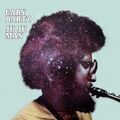
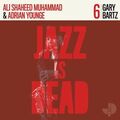
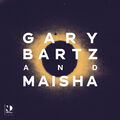
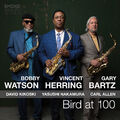
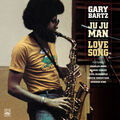
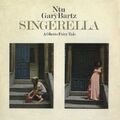
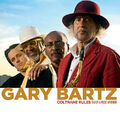
Born in Baltimore, Maryland, on September 26, 1940, Gary Bartz learned to play the alto saxophone at the age of eleven and performed at his father’s nightclub, which was frequented by musicians such as Art Blakey and George Benson. A student at the Peabody Conservatory in Baltimore and later at the Juilliard School in New York, he joined Max Roach’s band in 1964, alongside singer Abbey Lincoln. After a stint with Art Blakey & His Jazz Messengers (1965–1966), the young musician accompanied McCoy Tyner and Blue Mitchell. By 1970, when Miles Davis called on him for the tour and recording of the album Live/Evil, the saxophonist had already turned toward jazz fusion with the group Gary Bartz NTU Troop and the albums Libra (1968), Another Earth (1968), and Home! (1969), before the two volumes of Harlem Bush Music: Uhuru and Taifa (1971), followed by Juju Street Songs (1972). In 1973, he collaborated with Jackie McLean’s quartet on Ode to Super, then gradually shifted toward commercial jazz-funk after Juju Man (1976), leading to his best-known period with the albums Music Is My Sanctuary (1977), Love Affair (1978), and Bartz (1980), in which he played accessible jazz, sometimes accompanied by backing vocalists. Over the course of his subsequent recordings and between his collaborations with the group Sphere (1982–1998), Gary Bartz returned to a more conventional style: in 1988, he paid tribute to Thelonious Monk on Reflections of Monk - The Final Frontier, then recorded with a quartet or quintet on albums such as There Goes the Neighborhood (1991), Alto Memories (1995), and The Red and Orange Poems (1995). In 2000, he collaborated with Czech guitarist Jarek Smietana on the album African Lake, then followed up with his band on The Montreal Concert (2001). Afterward, absorbed by touring, his studio appearances became less frequent with the OYO Recordings label, but he nevertheless recorded Soprano Stories (2005), Coltrane Rules: Tao of a Music Warrior (2012), and A Place in Time (2016).